
Introduction: When Television Finally Adapts to You
Think about the last time traditional TV truly worked around your schedule. Chances are, it didn’t. You waited for programs to start, missed episodes, or paid for dozens of channels you never watched. That quiet frustration is exactly why internet protocol television has gained such momentum. IPTV doesn’t ask you to rearrange your life—it reshapes television around your habits, your devices, and your pace.
Instead of broadcasts locked to fixed timetables, you get flexible streaming delivered through the internet. You choose what to watch, when to watch it, and where to watch it. This article walks you through how internet protocol television works, why it’s different, and whether it fits the way you consume entertainment today.
Table of Contents
What Is Internet Protocol Television (IPTV)?
At its core, internet protocol television is a system that delivers TV content through internet-based networks rather than traditional terrestrial, satellite, or cable formats. Instead of receiving signals through antennas or dishes, you stream content as digital data over an IP connection.
A Simple Explanation
When you use IPTV, television channels and video libraries are sent to you in small data packets over the internet. Your device receives those packets, reassembles them, and plays the video in real time. From your perspective, it feels instant and seamless—much like opening a website or watching an online video.
What Makes IPTV Unique
- Content is streamed, not broadcast
- Viewing is personalized rather than fixed
- You’re not limited to a single screen or location
This shift changes television from a one-way broadcast into an interactive experience built around your preferences.
How Internet Protocol Television Works Behind the Scenes
Understanding how IPTV works helps you see why it feels smoother and more flexible than older TV systems.
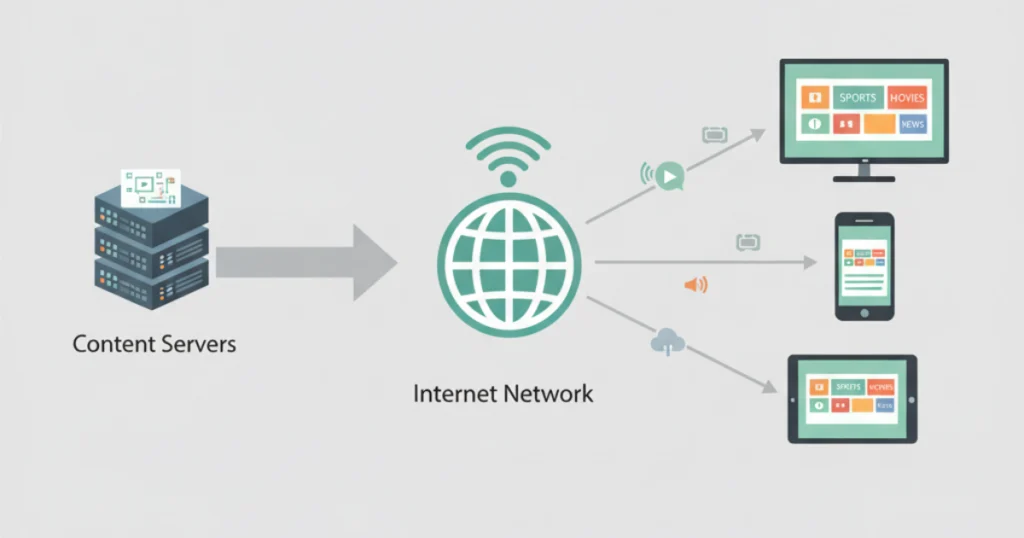
The Technical Flow (Simplified)
- TV content is stored on secure servers
- Content is converted into IP-compatible data packets
- Those packets travel through broadband or fiber networks
- Your device decodes and plays the stream instantly
Unlike broadcast TV, IPTV sends only the content you request. That efficiency reduces wasted bandwidth and opens the door to advanced features like pause, rewind, and on-demand access.
Why Internet Quality Matters
Because IPTV relies on data transmission, your viewing experience depends on connection stability. A steady internet line ensures smooth playback, while weak connections may cause buffering or quality drops.
IPTV vs Traditional Television: What’s the Real Difference?
If you’re deciding whether IPTV is worth it, the comparison with traditional TV is unavoidable.
Key Differences Explained
- Delivery method: IPTV uses the internet; cable and satellite rely on dedicated infrastructure
- Flexibility: IPTV adapts to your schedule instead of fixed broadcast times
- Device freedom: You’re not tied to one television set
Quick Comparison Table
| Feature | Internet Protocol Television | Cable TV | Satellite TV |
| Internet-based delivery | Yes | No | No |
| On-demand content | Extensive | Limited | Limited |
| Multi-device access | Yes | Rare | No |
| Installation hardware | Minimal | Required | Required |
| Custom viewing | High | Low | Low |
This difference explains why many viewers describe IPTV as “television without limits.”
Types of Internet Protocol Television Services
Internet protocol television isn’t a single format—it’s a collection of viewing models designed to fit different habits.
Live IPTV
This mirrors traditional TV but uses internet delivery. You watch news, sports, and events as they happen, without satellite dishes or cable boxes.
Video on Demand (VOD)
VOD gives you a library of movies and series available anytime. You decide when playback starts, pauses, or resumes—no schedules involved.
Time-Shifted IPTV
Missed a show earlier? Time-shifted IPTV lets you replay recent broadcasts, making “I forgot to record it” a thing of the past.
Devices That Support Internet Protocol Television
One of IPTV’s biggest strengths is device compatibility. You’re not locked into a single screen.
Common IPTV-Compatible Devices
- Smart TVs
- Smartphones and tablets
- Laptops and desktop computers
- Streaming boxes and media players
As long as your device can connect to the internet and run a compatible app, IPTV fits right in.
Why More People Are Switching to IPTV
The rise of internet protocol television isn’t accidental. It solves several long-standing TV frustrations.
Main Benefits for You
- Lower monthly costs compared to traditional subscriptions
- Access to international and niche channels
- High-definition and 4K streaming options
- No rigid contracts or hardware dependencies
- Personalized channel lists and favorites
You pay only for the content that actually matters to you.
What You Need to Get Started with IPTV
You don’t need a complex setup to begin. Think of IPTV like a simple recipe—just a few essential ingredients.
Basic IPTV Setup Checklist
- Stable internet connection (10–25 Mbps recommended)
- Compatible device
- IPTV player or application
- Content source or subscription
IPTV Setup Ingredients Table
| Ingredient | Purpose | Required |
| Internet connection | Delivers video data | Yes |
| IPTV app/player | Plays the stream | Yes |
| Device | Displays content | Yes |
| Playlist or URL | Accesses channels | Yes |
| VPN (optional) | Privacy and stability | Optional |
With these elements in place, IPTV becomes plug-and-play.
Is Internet Protocol Television Legal?
This is one of the most common questions—and the answer requires nuance.
The Clear Distinction
- IPTV technology itself is legal
- Legality depends on how content is licensed and distributed
When content is properly licensed, IPTV functions just like any other digital streaming service. Problems arise only when copyrighted material is redistributed without authorization.
How You Protect Yourself
- Choose reputable providers
- Avoid “too good to be true” offers
- Understand local streaming laws
Being informed keeps your experience safe and uninterrupted.
Common IPTV Problems (and How You Fix Them)
Even modern technology has occasional hiccups. Fortunately, most IPTV issues are easy to resolve.
Typical Challenges
- Buffering during playback
- Temporary channel outages
- App compatibility issues
Practical Fixes You Can Try
- Restart your router and device
- Switch from Wi-Fi to a wired connection
- Lower stream resolution temporarily
- Update your IPTV application
In many cases, these quick steps restore smooth streaming within minutes.
Who Benefits Most from Internet Protocol Television?
IPTV isn’t limited to a specific audience—it adapts to many lifestyles.
IPTV Is Ideal If You…
- Follow international sports or news
- Travel often or live abroad
- Prefer watching on multiple devices
- Want flexible, affordable entertainment
- Enjoy on-demand content over schedules
If you value control and convenience, IPTV aligns naturally with your habits.
The Future of Internet Protocol Television
Internet protocol television continues to evolve alongside internet infrastructure.
What’s Coming Next
- Smarter content recommendations
- Improved compression for smoother streams
- Higher resolutions with less bandwidth
- Deeper integration with smart homes
As networks improve, IPTV becomes not just an alternative—but the default way television is consumed.
Frequently Asked Questions About Internet Protocol Television
How does Internet Protocol Television work, and what does it actually mean?
Internet protocol television delivers TV content over the internet using data packets, allowing you to stream live channels or on-demand videos on various devices.
Is internet protocol television better than cable TV?
For many viewers, yes. IPTV offers more flexibility, lower costs, and multi-device access compared to traditional cable systems.
Do you need fast internet for internet protocol television?
A stable connection is essential. Around 10 Mbps supports HD streaming, while 20–25 Mbps is recommended for higher quality.
Can you watch internet protocol television on your phone?
Yes. IPTV works on smartphones, tablets, and other portable devices as long as they support compatible apps.
Is internet protocol television safe to use?
When you choose legitimate sources and secure your connection, IPTV is generally safe and reliable.
Conclusion: Is Internet Protocol Television Right for You?
Internet protocol television represents a fundamental shift in how you experience TV. Instead of rigid schedules and limited choice, you gain freedom, flexibility, and personalization. You decide what matters, what plays next, and which screen fits your moment.
If you’re ready to leave behind outdated viewing habits and embrace a smarter way to watch, IPTV offers that opportunity. Explore your options carefully, choose trusted sources, and start shaping entertainment around your life—not the other way around.
Your Next Step
If this guide helped clarify internet protocol television for you, take action today. Compare your current TV costs, test IPTV on one device, and experience firsthand how modern television feels when it finally listens to you.